Monday, 24 March 2014

HISPANISMS

To build castles in Spain: to daydream or make plans that will never come true (Oxford dictionaries)

In the same way we are interested in the language and culture of English speaking countries, there is a longtime tradition of Hispanic studies in the USA and in the UK.
We can remember the cooperation of the International Brigades with the Republican cause during the Spanish Civl War and bear in mind that numerous intellectuals went to the USA in exile after the civil war to teach at American universities.
Upon the death of former Prime Minister Adolfo Suárez, historian Paul Preston has been asked to write his obituary for The Guardian. This is a good excuse to devote some lines to the cultural contact between Spain and Anglo-Saxon countries.


Paul Preston (Liverpool 1946) is a specialist in the Spanish Civil War and is the author of the biographies of General Franco and King Juan Carlos. 

El holocausto español (Paul Preston)-TrabalibrosFranco (Paul Preston)-TrabalibrosJuan Carlos el rey de un pueblo (Paul Preston)-TrabalibrosLas tres Españas del 36 (Paul Preston)-TrabalibrosLa Guerra Civil española (Paul Preston)-Trabalibros

Other famous Anglo-Saxon historians are Ian Gibson (Dublin,1939), famous for his biographies of Lorca, Dalí, Buñuel and Machado; Gabriel Jackson (New York, 1921), who lived in Barcelona for 26 years and is an authority on the Second Republic and the Civil War; Hugh Thomas (Windsor, 1931), famous for his studies on Spain's Golden Age, the discovery of America, the conquest of Mexico, and the slave trade; and Raymond Carr (Bath,1919), a specialist in Franco's dictatorship and the following period.

The fascination with Spain has a long tradition, dating back to the 19th century or during the Spanish Civil War. We can mention here the travel book The Bible in Spain, subtitled "or the Journey, Adventures, and Imprisonment of an Englishman in an Attempt to Circulate the Scriptures in the Peninsula" written in England by George Borrow (1843). Or Hemingway's For Whom the Bell Tolls (1940) and Homage to Catalonia by George Orwell.(1938).

For Whom the Bell Tolls Movie Poster


I would like to finish this entry with a special mention to the American author, essayist and journalist Barbara Probst Solomon (New York, 1928). She was one of the protagonists of a strange story which was the origin of Fernando Colomo's movie Los años bárbaros (1989): in 1948, Solomon and Barbara Mailer (the sister of the writer Norman Mailer) aided Paco Benet in the rescue of two Spanish students being held in the Franco gulag near Madrid, where they were used as slave labour to build Francisco Franco's future tomb, The Valley of the Fallen/Valle de los Caídos. One of the students, Nicolas Sanchez Albornoz was the son of the historian Claudio Sanchez Albornoz, the president of the Spanish Republic in Exile. Solomon and Paco Benet, brother of the Madrid novelist Juan Benet, spent five years together, mainly in Paris, where Benet and Solomon edited the resistance magazine Peninsula together. She was a correspondent for El País and has been awarded the 25th Francisco Cerecedo Prize by the Association of European Journalists in Spain.
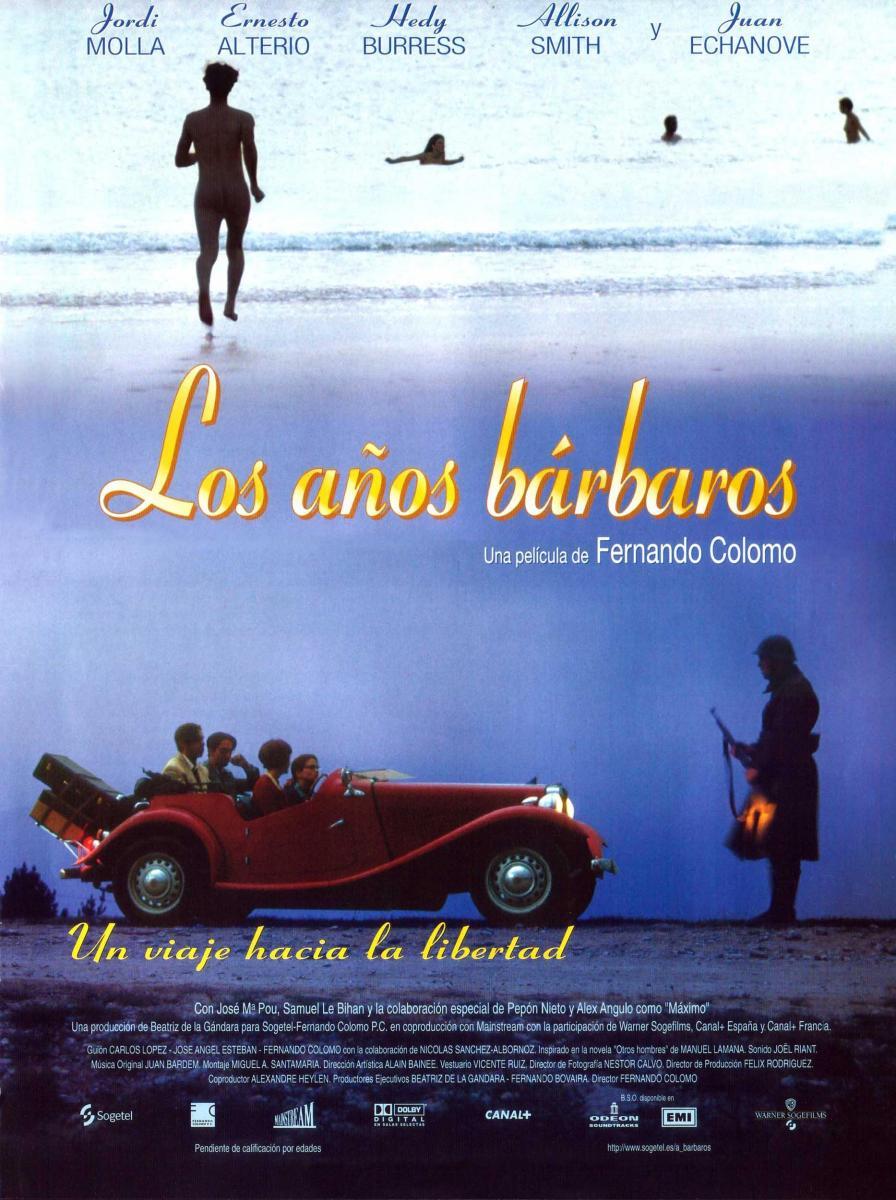
Los años bárbarosTK

Friday, 7 March 2014

8th MARCH - INTERNATIONAL WOMEN'S DAY

Women hold up half the sky (Chinese proverb)


Every year on March 8, millions of women and men around the world celebrate International Women's Day. This day is an ideal opportunity to reflect on the progress made to advance women's equality, to assess the challenges facing women in contemporary society, to consider future steps to enhance the status of women and, of course, to celebrate the gains made in these areas.

Women on all continents, often divided by ethnic, linguistic, cultural, economic and political differences, come together to celebrate International Women's Day. Rallies, marches, fairs, receptions, shows, films and debates are held around the world to celebrate the achievements in gender equality.

Some historical facts about this celebration:
  •  Women from clothing and textile factories staged a protest against abusive working conditions on 8 March 1857 in New York City.
  • The first IWD was observed on 28 February 1909 in the United States following a declaration by the Socialist Party of America.
  • Among other relevant historic events, IWD commemorates the Triangle Shirtwaist Factory Fire (New York, 1911): over 140 women, most of them young immigrants, lost their lives when a  fire took place in this textile factory in the heart of Manhattan because of the lack of safety measures.
  •  The colour purple of the garnments made in this factory has become the symbol of women’s fight for freedom.
  • The demand for shorter hours and higher wages soon became one with the demand for the right to vote.
  • New Zealand was the first country in the world to grant women the right to vote (1893).
  • The first country in Europe to introduce women's suffrage was Finland (1907) and the last one Lietchenstein (1984).
  • In Spain, this right was first recognised in the 1931 Constitution, issued during the Second Republic. 
                                                       
You can watch the following one-minute video issued by the UN; it will give you a quick overview of the history of women's suffrage.


         Why is this celebration necessary?

  • About 800 women die every day in childbirth.
  • 39 million -  Number of girls worldwide who are not in school, 54% of the total number of children
  • 14m girls — some as young as eight years old — will be married against their will in 2014.
  • An estimated 1.2m children are trafficked into slavery each year; 80% are girls.
  • Instruments of genocide such as sexual violence and rape are often directed at women and girls.
  • Girls are actually less likely to reach adulthood because of gender discrimination. Tens of millions of girls have been aborted, killed, undernourished, or terribly neglected due to their gender
  • More than 16.4 million women in the world have HIV/AIDS. In some regions, girls are HIV-positive at a rate 5 times that of boys.
         The following video will confirm the data above:


   Finally, this is The Guardian's proposal of the top 100 women who managed to break the 'glass ceiling', organised in categories according to their jobs or areas of influence.


Wednesday, 5 March 2014

THE OSCARS 2014 EDITION


File:ACMI 14.jpg

It is difficult to find something that has not been said about the Oscars yet. But are you familiar with the history of these awards?
The Academy Awards, also known as The Oscars, is an annual ceremony which honours merit in the film industry. It was first held in 1929, and televised for the first time in 1953. Only the 1938 floods in Los Angeles or the assassination of Martin Luther King in 1968 postponed the ceremony for a few days.
Legend has it that the name "Oscar" comes from a secretary in the studios who made reference to the statuette's reminding her of her "Uncle Oscar".

This is the link to the Oscar's official website

And  here you can watch some strange facts about these awards:


As important as the Awards themselves is the Red Carpet. It was Italian designer Georgio Armani who realised the entrance to the venue was the perfect catwalk to have his designs publicised. In recent years, the red carpet has become the right place to see stars and celebrities wearing the latest fashion in clothes, makeup and jewellery. Watch this edition's red carpet here below!!


And finally, last but not least, here is the list of this edition's winners:


Best picture :"12 Years a Slave" 
Directing: Alfonso Cuaron - "Gravity"
Actor in a leading role:  Matthew McConaughey - "Dallas Buyers Club"
Actor in a supporting role: Jared Leto - "Dallas Buyers Club"
Actress in a leading role:  Cate Blanchett - "Blue Jasmine"
Actress in a supporting role:  Lupita Nyong'o - "12 Years a Slave"
Foreign language film:  "The Great Beauty" (Italy)
Documentary:  "20 Feet From Stardom"Music (original song):  "Let it Go" - "Frozen"

The highlight of the ceremony, presented by stand-up comedian and TV host Ellen DeGeneres, took place when she gathered some of the most famous stars at the ceremony and improvised a selfie.
This photograph has beaten a new record, as it has become the most retweeted picture ever.

Ellen DeGeneres group Oscar selfie


REMEMBERING PETE SEEGER

Pete Seeger2 - 6-16-07 Photo by Anthony Pepitone.jpg

American folk singer and activist Pete Seeger died last January aged 95. Born in New York, he was a prolific songwriter; his best-known songs include "Where Have All the Flowers Gone?" or "If I Had a Hammer". Seeger was one of the folksingers most responsible for popularizing the spiritual "We Shall Overcome" (also recorded by Joan Baez and many other singer-activists) that became the acknowledged anthem of the 1960s American Civil Rights Movement. He became a member of the Communist Party USA, which he left years later, and he was also a fervent supporter of the Republican forces in the Spanish Civil War. He popularised the song "Jarama Valley", which we know as "La vall del riu vermell". This song is an old folk song that dates back to the late 19th century; its original name was "Red River Valley" but the lyrics were changed by American composer and folk singer Woody Guthrie to fit the purposes of the International Brigades who came to Spain to fight in the Civil War (1936-1919).


Monday, 20 January 2014

BARCELONA AMONG THE 10 SMARTEST CITIES IN EUROPE

Which European cities are doing the most innovative things with infrastructure, technology, and entrepreneurship?

As you already know our city does not appear very often on the international media. However, this time Barcelona has been chosen the fourth smartest city in Europe after Copenhaguen, Amsterdam and Vienna.
Congratulations!

Read more here

Monday, 9 December 2013

NELSON MANDELA DEAD AT 95

 “It always seems impossible until it’s done.”  NELSON MANDELA (1918-2013)


Rolihlahla Mandela was born in Transkei, South Africa on 18 July 1918 and was given the name of Nelson by one of his teachers. His father Henry was a respected advisor to the Thembu royal family.


ANC involvement
Mandela was educated at the University of Fort Hare and later at the University of Witwatersrand, qualifying in law in 1942. He became increasingly involved with the African National Congress (ANC), a multi-racial nationalist movement trying to bring about political change in South Africa.


In 1948, the National Party came to power and began to implement a policy of 'apartheid', or forced segregation on the basis of race. The ANC staged a campaign of passive resistance against apartheid laws.
In 1952, Mandela became one of the ANC's deputy presidents. By the late 1950s, faced with increasing government discrimination, Mandela, his friend Oliver Tambo and others began to move the ANC in a more radical direction. In 1956, Mandela went on trial for treason. The court case lasted five years, and ended with Mandela being acquitted. In the photograph below, Mandela with Oliver Tambo.


Sharpeville
In March 1960, 69 black anti-apartheid demonstrators were killed by police at Sharpeville. The government declared a state of emergency and banned the ANC. In response, the organisation abandoned its policy of non-violence and Mandela helped establish the ANC's military wing 'Umkhonto we Sizwe' or 'The Spear of the Nation'. He was appointed its commander-in-chief and travelled abroad to receive military training and to find support for the ANC. In the photograph below, Mandela leaving after a  meeting with the ANC.


Life imprisonment
On his return he was arrested and sentenced to five years in prison. In 1963, Mandela and other ANC leaders were tried for plotting to overthrow the government by violence. The following year Mandela was sentenced to life imprisonment. He was held in Robben Island prison, off the coast of Cape Town, and later in Pollsmoor Prison on the mainland. During his years in prison he became an international symbol of resistance to apartheid. Below, an aerial photograph of Robben Island.


Mandela became one of the most famous political prisoners of all time and appartheid started to be regarded as an infamy internationally. The song 'Free Nelson Mandela', performed by The Specials, was recorded in London and soon became very popular, especially in Africa.  Unlike most protest songs, the track is upbeat and celebratory, drawing on musical influences from South Africa.


In 1990, the South African government responded to internal and international pressure and released Mandela, at the same time lifting the ban against the ANC. In 1991 Mandela became the ANC's leader. You can see a photograph of Mandela with his secon wife Winnie the day he came out of prison.


A respected global statesman
He was awarded the Nobel Peace Prize together with FW de Klerk, then president of South Africa, in 1993. The following year South Africa held its first multi-racial election and Mandela was elected its first black president.
The film Invictus is a recreation of the racial tensions lived in South Africa right after Nelson Mandela became President of the nation. In the photograph below Nelson Mandela greets François Pienaar, captain of the South Africa rugby union team, the Springboks, in 1995. In the movie, their parts were respectively played by Morgan Freeman and Matt Damon.

In 1998, Mandela was married for the third time to Graça Machel, the widow of the president of Mozambique. Mandela's second wife, Winnie, whom he married in 1958 and divorced in 1996, remains a controversial anti-apartheid activist.
In 1997 he stepped down as ANC leader and in 1999 his presidency of South Africa came to an end.
In the photograph below, Mandela vists his cell in Robben Island in 1994, on the 4th anniversary of his excarceration.


In 2004, Mandela announced his retirement from public life, although his charitable work continued. On 29 August 2007, a permanent statue to him was unveiled in Parliament Square, London.
He died on 5 December 2013, aged 95. His funerals have been a celebration of his life by the South African people. In the following article, the pretigious Ugandan journalist Patience Akumu reflects on Mandla's legacy.

Finally, watch the obituary video released by CNN 


Mandela’s name will be forever linked with the struggle against the oppression of his people and the overcoming of the apartheid regime. His support to the Truth and Reconciliation Comission, designed to cure the wounds inflicted by appartheid, was an invitation to forget hatred and look for common ground to build up a new society.
Mandela's example and his political legacy of non-violence and the rejection of all forms of racism will long remain an inspiration for people around the world.


Saturday, 23 November 2013

SELFIE, BELFIE AND DRELFIE


SELFIE: OXFORD DICTIONARY WORD OF THE YEAR 2013


selfie image

Last year Oxford University Press split its word of the year honors between the US and the UK, but for 2013 there's one word to rule them all — and it is "selfie." The term beat out contenders like twerk, bitcoin, and binge-watch, due largely to its remarkable uptick in usage. According to research conducted by Oxford Dictionaries editors, the use of selfie has increased an incredible 17,000 percent since the same time last year.

While the term has certainly come into the mainstream over the past 12 months, its origins actually go much further back. The Oxford University Press discovered the term used in an Australian forum posting in 2002, where it was used to describe a photo the poster took of themselves after a drunken fall. Despite earning the year's top honors, however, selfie is oddly not included in the Oxford English Dictionary itself. It is part of the online Oxford Dictionaries website, however, and is being considered for future inclusion in the OED as well.

This isn't the first time that technology's heavy influence on popular culture has resulted in a word of the year selection. In 2005 the US word of the year was "podcast," while last last year's US honors went to none other than the venerable GIF (which stands for 'graphics interchange format').

Click on this link and you will find the origins and meaning of this word, others derived from it, like belfie or drelfie, and the ranking of shortlisted words for this year.
Read more here

The BBC also devoted some lines to this new word. Check about the convenience of selfies at funerals or find out what the Obama girls and the Pope have in common!!
Read this BBC article and don't miss the video


Friday, 22 November 2013

JFK'S ASSASSINATION: AN AMERICAN TRAGEDY


We stand today on the edge of a New Frontier — the frontier of 1960s, the frontier of unknown opportunities and perils, the frontier of unfilled hopes and unfilled dreams. ...

John Fitzgerald Kennedy 
(Brookline, Massachusetts, 29 May 1917 - Dallas, Texas, 22 November1963)


Today is the 50th anniversary of John F. Kennedy's assassination. As in any good tragedy it contains all the necessary ingredients to capture a nation's imagination: power, ideals, glamour, mystery, love, sex and death. The rendition of the plot was, and still is, in the hands of the media.

John Fitzgerald Kennedy was born on 29 May 1917 in Massachusetts, into a wealthy and political Irish-American family. Educated at Harvard University, he graduated in 1940. Following naval service in the Pacific in World War Two, he entered politics in 1946, spurred on by his ambitious father Joseph, and won election as a Democrat to the US House of Representatives. In 1952, he was elected to the Senate.

In 1960, Kennedy won the party's presidential nomination and defeated Richard Nixon in the subsequent election that same year. At 43, he was the country's youngest president as well as its first Catholic head of state. He presented himself as a youthful president for a new generation. His wife Jackie added glamour to the presidency, although it was later revealed that he had numerous affairs. In a country without royalty they represented a new kind of aristocracy, embodying the mythical kingdom of Camelot.
Kennedy's years in power were marked in foreign affairs by Cold War tension, together with a rhetorical commitment to introducing domestic reforms - most of all to expanding the civil rights of African Americans.
He inherited a plan that was devised under the preceding Eisenhower presidency for anti-communist Cuban exiles in the US to invade Cuba and overthrow Fidel Castro's government. In April 1961, the 'Bay of Pigs' invasion ended in failure. According to some historians, this led the Soviet Union to conclude that Kennedy was a weak leader, and that they could get away with installing nuclear weapons on Cuba in 1962. The Cuban missile crisis ensued. After a thirteen-day stand-off that brought the world to the brink of nuclear war, Soviet leader Nikita Kruschev withdrew the weapons and Kennedy's reputation was restored.
Domestically, Kennedy oversaw the desegregation of the University of Mississippi in 1962, and of the University of Alabama the following year - despite each state's political establishment opposing this policy. More substantial legislation to encode civil rights was not passed, however, until the subsequent administration of Lyndon Johnson (1963 - 1969), who was Vice-President and acceded to the position of President on Kennedy’s assassination. 

Here is today's covearge by BBC
Read more about the man and the myth

President Kennedy was assassinated on 22 November 1963 in Dallas, Texas. According to the Warren Commission established to investigate the assassination, a lone gunman, Lee Harvey Oswald, killed the president, but there has been consistent speculation ever since that Kennedy's death was the result of a conspiracy. 

Watch the following CNN video about the enduring fascination caused by JFK.


Finally you can visit The Wahington Post photo gallery which shows some public and private moments in John Kennedy's life.

Sunday, 17 November 2013

WRITER DORIS LESSING DIES AGED 94

"I'm just a story teller" (Doris Lessing)


Doris May Lessing (née Tayler; Persia 22 October 1919 – England 17 November 2013) was a British novelist, poet, playwright, librettist, biographer and short story writer. Her novels include The Grass is Singing (1950), the sequence of five novels collectively called Children of Violence (1952–69), The Golden Notebook (1962), The Good Terrorist (1985), and five novels collectively known as Canopus in Argos: Archives (1979–1983).
Lessing was awarded the 2007 Nobel Prize in Literature. In doing so the Swedish Academy described her as "that epicist of the female experience, who with skepticism, fire and visionary power has subjected a divided civilization to scrutiny. Lessing was the eleventh woman and the oldest person to ever receive the Nobel Prize in Literature.
In 2001, Lessing was awarded the David Cohen Prize for a lifetime's achievement in British Literature. In 2008, The Times ranked her fifth on a list of "The 50 greatest British writers since 1945".

Lessing was born in Kermanshah, Iran, then known as Persia, on 22 October 1919, to Captain Alfred Tayler and Emily Maude Tayler, who were both English and of British nationality. Her father, who had lost a leg during his service in World War I, met his future wife, a nurse, at the Royal Free Hospital where he was recovering from his amputation. Alfred Tayler and his wife moved to Kermanshah, Iran, in order to take up a job as a clerk for the Imperial Bank of Persia and it was there that Doris was born in 1919. The family then moved to the British colony of Southern Rhodesia (now Zimbabwe) in 1925 to farm maize, among other plants, when her father purchased around one thousand acres of bush. Lessing's mother attempted to lead an Edwardian lifestyle amidst the rough environment, which would have been easy had the family been wealthy; in reality, such a lifestyle was not feasible. The farm failed to deliver any monetary value in return.

Lessing was educated in a Roman Catholic all-girls school in Salisbury (now Harare). She left school at the age of 14, and was self-educated from then on; she left home at 15 and worked as a nursemaid. She started reading material that her employer gave her on politics and sociology and began writing around this time. In 1937, she married her first husband, Frank Wisdom, with whom she had two children (John and Jean), before the marriage ended in 1943.

After her first divorce, Lessing's interest was drawn to the popular community of the Left Book Club, a communist book club which she had joined the year before. It was here that she met her future second husband, Gottfried Lessing. They were married shortly after she joined the group, and had a child together (Peter), before the marriage failed and ended in divorce in 1949. After these two failed marriages, she has not been married since. Gottfried Lessing later became the East German ambassador to Uganda, and was murdered in the 1979 rebellion against Idi Amin Dada.  

 Because of her campaigning against nuclear arms and South African apartheid, Lessing was banned from that country and from Rhodesia for many years. She moved to London with her youngest son in 1949. Her first novel, The Grass is Singing, was published in 1950. Her breakthrough work, The Golden Notebook, was written in 1962.


She declined a damehood, but accepted the Commonwealth appointment as a Companion of Honour at the end of 1999 for "conspicuous national service". In 2007, Lessing was awarded the Nobel Prize in Literature. She received the prize at the age of 88 years, making her the oldest winner of the literature prize at the time of the award. She also stands as only the eleventh woman to be awarded the Nobel Prize in Literature by the Swedish Academy in its 106-year history.

Sunday, 10 November 2013

AMMA IN BARCELONA

“Love is our true essence. Love has no limitations of caste, religion, race or nationality. We are all beads strung together on the same thread of love.” —Amma


Mata Amritanandamayi, or Amma (Mother), as she is known,  was born Parayakadavu, state of Kerala, India, in 1953. Born to a family of fishermen, she displayed an intense spirituality from a very early age. Her education ended at the age of nine, when she began to take care of her younger siblings and the family domestic work full-time.

 As part of her chores, Amritanandamayi gathered food scraps from neighbours for her family's cows and goats, through which she was confronted with the intense poverty and suffering of others. She would bring these people food and clothing from her own home; soon she got a reputation for curing sick cows.

Her family, which was not wealthy, scolded and punished her. Amritanandamayi also began to spontaneously embrace people to comfort them in their sorrow. It was not permissible for a 14-year-old girl to touch others, especially men. But despite the reaction of her parents, Amritanandamayi continued. Regarding her embracing of others, Amritanandamayi commented, “I don’t see if it is a man or a woman. I don’t see anyone different from my own self. A continuous stream of love flows from me to all of creation. This is my inborn nature. The duty of a doctor is to treat patients. In the same way, my duty is to console those who are suffering."

Despite numerous attempts by her parents to arrange her marriage, Amritanandamayi rejected their efforts. In 1981, after various seekers had begun residing at her parents' property in Parayakadavu in the hopes of becoming Amritanandamayi's disciples, the Mata Amritanandamayi Math (MAM), a worldwide foundation, was founded. This institution is involved in many spiritual and charitable projects, like founding orphanages in India or raising money for the vicitms of natural disasters such as hurricane Katrina or tsunamis. It gets money from private donations exclusively but also from the sales of items related to her figure and her life.

Her ashram or spiritual centre has its hedquarters in Amritapuri, Kerala, and many people from all over the world visit it every year. She is also called "the hugging saint" and she travels the world hugging people who  wait long hurs to get her embrace. Miracles, meditation, prophesies and a lot of money revolve around Amma's orbit. She is reported to have raised 3 million dollars in a 7-week tour. She says she only offers love and comfort to those who need it.


Next week Amma is coming to Granollers, Barcelona, as a part of her European tour. Would you like to go?
Read more

In the following video, you can watch a BBC report on Amma's visit to London two years ago.


Monday, 28 October 2013

ROCK LEGEND LOU REED DIES AT 71


Lou Reed, who took rock 'n' roll into dark corners as a songwriter, vocalist and guitarist for the Velvet
Underground and as a solo artist, died last Sunday due to a liver disease. He was 71.
Born in Brooklyn, New York, in 1942, he studied journalism, film directing, and creative writing. In 1964 he met Welsh musician Johnny Cale and they formed the band Velvet Underground together with other musicians.
The group soon caught the attention of artist Andy Warhol and his associates, who inspired many of Reed's songs. Reed rarely gave an interview without paying homage to Warhol as a mentor. He left the band in 1970.
He started a solo career that gave songs like Walk on the Wild Side, Perfect Day or Berlin. He is survived by his third wife, artist Laurie Anderson.
He said abut his craft: “You do this because you like it, you think what you’re making is beautiful. And if you think it’s beautiful, maybe they think it’s beautiful.” 
The prestigious music magazine Rolling Stone has issued a special report on this occasion; you will find it on the link below. Don't miss the photo gallery!!
You can also listen to Berlin here below.


Sunday, 27 October 2013

ANNIE LEIBOVITZ


US photographer Annie Leibovitz (Conneticut 1949) was in Oviedo last Friday to get the prestigious Príncipe de Asturias award for humanities.
Read more
She is the descendant of Jewish immigrants from Central and Eastern Europe and she has had a longlife career working as a photographer for magazines such as Rolling Stone and Vanity Fair. She is the author of some of the most emblematic photographs of the 20th century: naked John Lennnon kissing a fully clothed Yoko or almost naked pregnant Demi Moore.
A major retrospective of Leibovitz's work was held at the Brooklyn Musueum (2006), based on her book, Annie Leibovitz: A Photographer's Life, 1990–2005, and included many of her professional pictures as well as numerous personal photographs of her family, children, and partner Susan Sontag.
She is also famous for her portraits of Queen Elizabeth II or the Disney series, in which Hollywood celebrities posed as Disney characters.
Here you can see some of her most famous photographs


Sunday, 20 October 2013

CATALAN ISSUES

As you might already have noticed, Spain and Catalonia rarely appear in Anglo-Saxon newspapers. And, sometimes,when this happens, it provokes an uproar in our media. Last year, The New York Times published a very controversial article on the Spnish crisis. Many people complained about the apocalyptic coverage and the gloomy vision of our country depicted by the dramatic black and white photographs. Some journalists compared these with the image of misery offered in Luis Buñuel's Viridiana, a dark portrait of Spain in the fifties.
Read can read this New York Times article here

Now it is Catalonia's turn. It seems the business of Independence leaves nobody indifferent and many foreign journalists have shown their interest in this matter. For example, Stephen Burgen, The Guardian corresondent in Barcelona who visited our school last year, covered the 11 September rally for his newspaper. Here you will find an article and videos produced by BBC, covering the latest Diada.
Read the article and watch the videos

Last week, however, The New YorkTimes published an article in which some important Catalan businessmen expressed their concern about what is increasingly being perceived as a major conflict.
Read this article

Now, how do you feel about the way "the others" see "us"? How accurate do you think is the portrait of our country given by some foreign media? Does this happen in the national press?

Thursday, 17 October 2013

ROMA GIRL DEPORTED

The deportation of 15-year old Leonarda Dibrani has been infuriating tha French (and many people in other EU countries) over the last three days. Here you can read about the circumstances of her arrest, her family's reaction, the French society's response and the position of the French Minister of Interior Manuel Valls. You will also find a link to the video we watched in class related to this event.
Read and watch the video
You can also watch the video below to learn more about the history and the culture of the Roma people,


Saturday, 12 October 2013

NOBEL PRIZES 2013

Last week we got to know the names of the personalities awarded with the Nobel Prize. I would like to point out three of them: In the first place, as this is a group with an important number of people with a degree in sciences, I'm sure you will be delighed with the prize given to Higgs and Englert on account of the renowned Higgs Boson Particle Theory also known as God's Particle.
Read more on this prize


Secondly, this is the first time a Canadian writer in English (a woman!!!)gets this price. Alice Munro has been universally acknowledged as the master of the short-story; her work has often been compared with that of Chekhov's. Read how the local press reacted to the news


Finally I would like to finish with the Nobel Peace Prize. Although Malala Yousafzai's name (the Pakistani girl shot for fighting in favour of the education of girls in her country) had been put forward by many, this time the Nobel Peace PriZe went to a chemical weapons watchdog. Bearing in mind the recent events in Syria, we can understand the relevance of the candidate. Read and watch the video


FEMEN

In our last class we talked about FEMEN, a radical feminist group founded in Ucrania, famous around the world for their protests against the violation of the rights of women.
Visit FEMEN's website
This protests are carried out by topless women like Amina Sbui, who made the movement famous by defying the Tunisian government with Q'ran lines painted on her topless chest.

Last week three topless FEMEN members protested in the Spanish Parliament against the new abortion law proposed by the Minister of Justiz, Alberto Ruiz Gallardón.
Read more

Friday, 27 September 2013

GHANAIAN POET KOFI AWOONOR DIES IN TERRORIST ATTACK IN KENYA


The African poet and novelist Kofi Awoonor has died aged 78 in the terrorist attack by al-Shabaab militants at the Westgate shopping mall in Nairobi. Awoonor was the most eminent of several African authors invited to participate in the Storymoja Hay festival, a celebration of writing and storytelling, in the Kenyan capital last week. His work was deeply rooted in the poetic and mythic traditions of the Ewe people in Ghana. He was also a diplomat and political activist who spent some time in prison when the party he supported was in opposition.
Read more 

Kofi Awoonor